
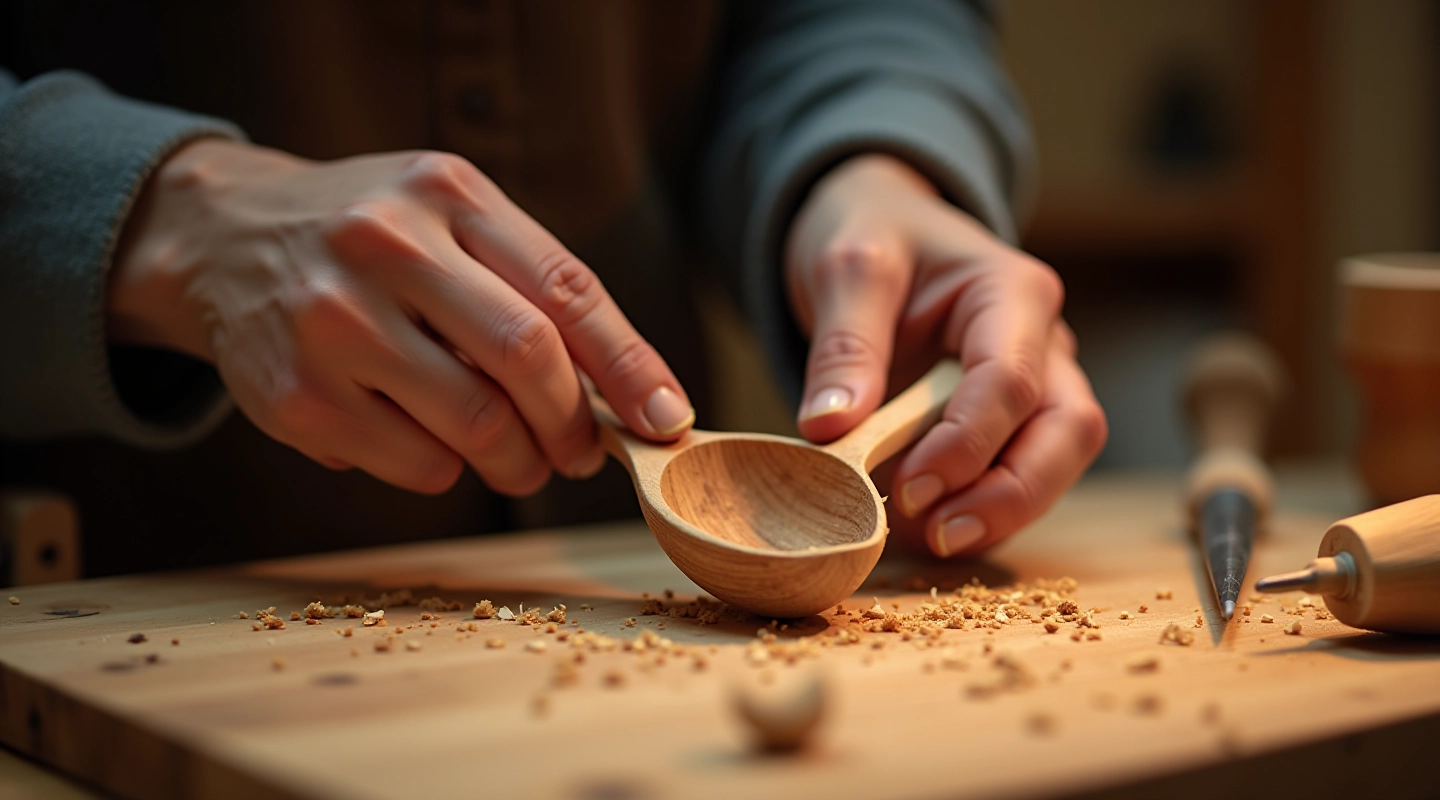
How to Carve Your First Spoon in a Weekend
Step-by-step instructions for creating a functional Latvian spoon. We cover tool setup, wood selection, and the specific carving sequence.
Read Guide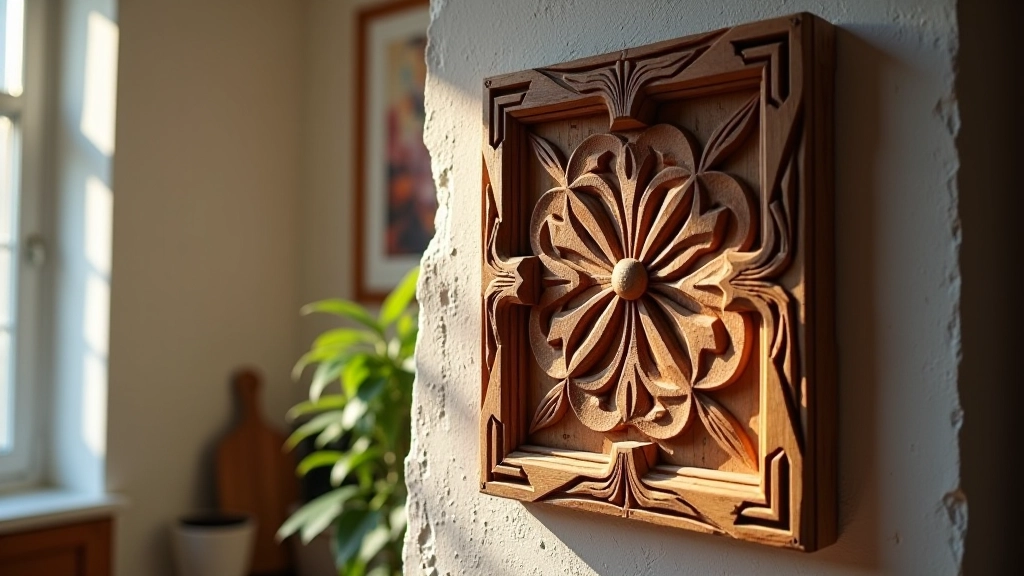
These patterns aren't random. Each symbol carries meaning rooted in centuries of folk tradition.
Editorial Team
Written by the wenroriteīga Woodcarving editorial team, focused on clear, honest guidance for beginning woodcarvers.
When you're starting out, it's easy to think patterns are just decoration. But they're actually the backbone of traditional woodcarving. In Latvia, every motif tells a story — stars represent protection, crosses symbolize the four directions, and geometric patterns connect to ancient sun worship symbols.
Learning to recognize these symbols won't just make your carvings look more authentic. It'll also help you understand the culture behind the work. You'll start seeing patterns differently — not as random lines, but as intentional marks that ancestors carved into objects for centuries.
Key insight: Traditional Latvian patterns aren't meant to be perfect or identical. Each carver adds personal variation. This is what gives authentic pieces their character.

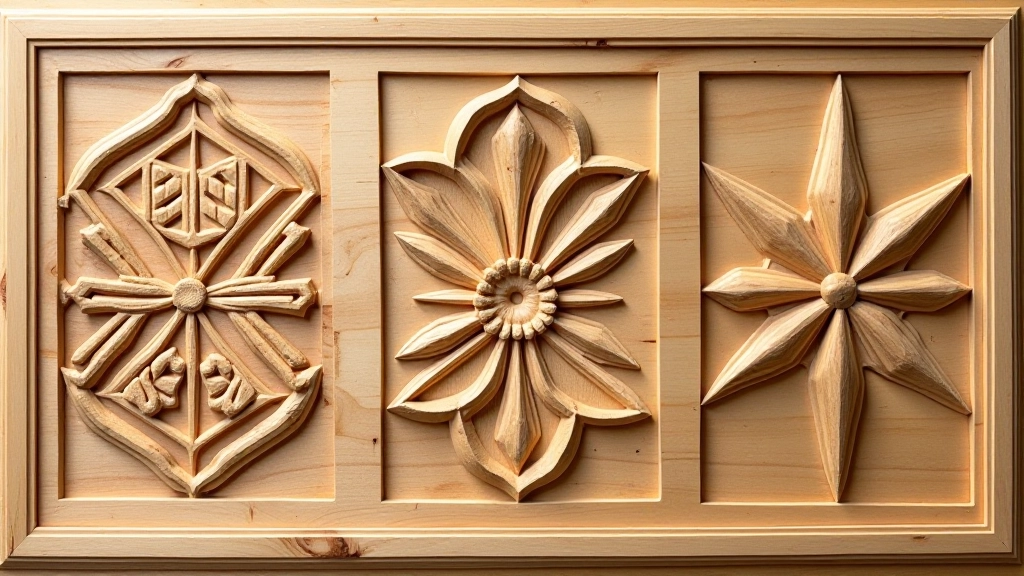
There's no single "right" way to organize Latvian patterns, but most traditional carvers work with three main groups. Learning these categories helps you build your own designs instead of just copying existing ones.
Straight lines, angles, and repeating shapes. These are the foundation of most relief carving. You'll see diamond grids, zigzags, and stepped patterns on everything from spoons to door frames. They're easier to execute than curves, which is why beginners often start here.
Leaves, flowers, and vines — but stylized rather than realistic. A Latvian carved leaf isn't trying to look exactly like a birch leaf. Instead, it's simplified into flowing curves that fit the carving medium. These require more practice with gouges.
Stars, crosses, and sun wheels appear constantly. A four-pointed star in Latvian carving represents protection and the four cardinal directions. Crosses symbolize spiritual or cosmological significance. These appear in almost every traditional pattern.

Here's the thing — you don't need to copy patterns exactly. Traditional carvers didn't have computers or photocopiers. They worked from memory and improvisation. Each person's version was slightly different, and that's what made it authentic.
Start by learning three or four basic geometric patterns. A simple diamond grid, a stepped pattern, and a basic zigzag. Practice these on scrap wood until your hand understands the rhythm. Then try combining them in new ways.
When you're ready for plant motifs, don't aim for perfect symmetry. Leaf veins don't need to match exactly from one leaf to the next. What matters is the overall flow and the depth of your carving. Use a 6mm or 8mm gouge for broader strokes, then refine with smaller tools.
Pro tip: Keep a notebook of patterns you like. Sketch them roughly, note the gouge sizes used, and sketch your variations. You'll build a personal library within a few months.
Explore related guides to deepen your carving skills
Step-by-step instructions for creating a functional Latvian spoon. We cover tool setup, wood selection, and the specific carving sequence.
Read Guide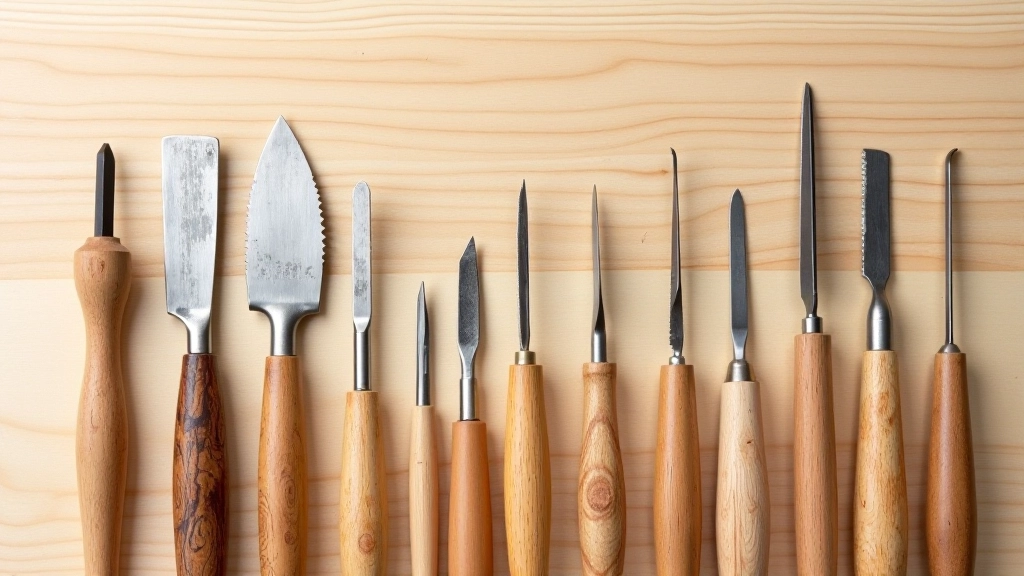
Not all carving tools are the same. We break down gouge sizes, blade shapes, and what you actually need to start.
Read Guide
We've seen them all. Grain direction mishaps, tool pressure problems, and wood selection errors that slow progress.
Read GuideThis article provides educational information about traditional Latvian carving patterns and techniques. It's designed to help beginners understand the cultural and practical aspects of the craft. Individual results will vary based on experience, wood type, and tool quality. Always work in a safe manner and follow proper tool safety practices. When working with hand tools, take breaks to prevent fatigue, and don't rush through any step.
You don't need to master all pattern types before carving your first piece. Pick one — maybe a simple geometric grid or a basic leaf motif — and practice it on a small piece of wood. Spend 3 to 4 hours with it. Your hands will start to understand the rhythm.
What makes Latvian carving special isn't technical perfection. It's the intention behind each mark. When you understand why a pattern exists — what it symbolizes, how it functions in the overall design — your carving gains authenticity that no amount of precision can replicate.
The patterns you'll carve today are part of a tradition that spans centuries. You're not just making objects. You're participating in something much older than yourself.
Ready to apply what you've learned? Start with our spoon carving guide or explore our tool selection resource.